
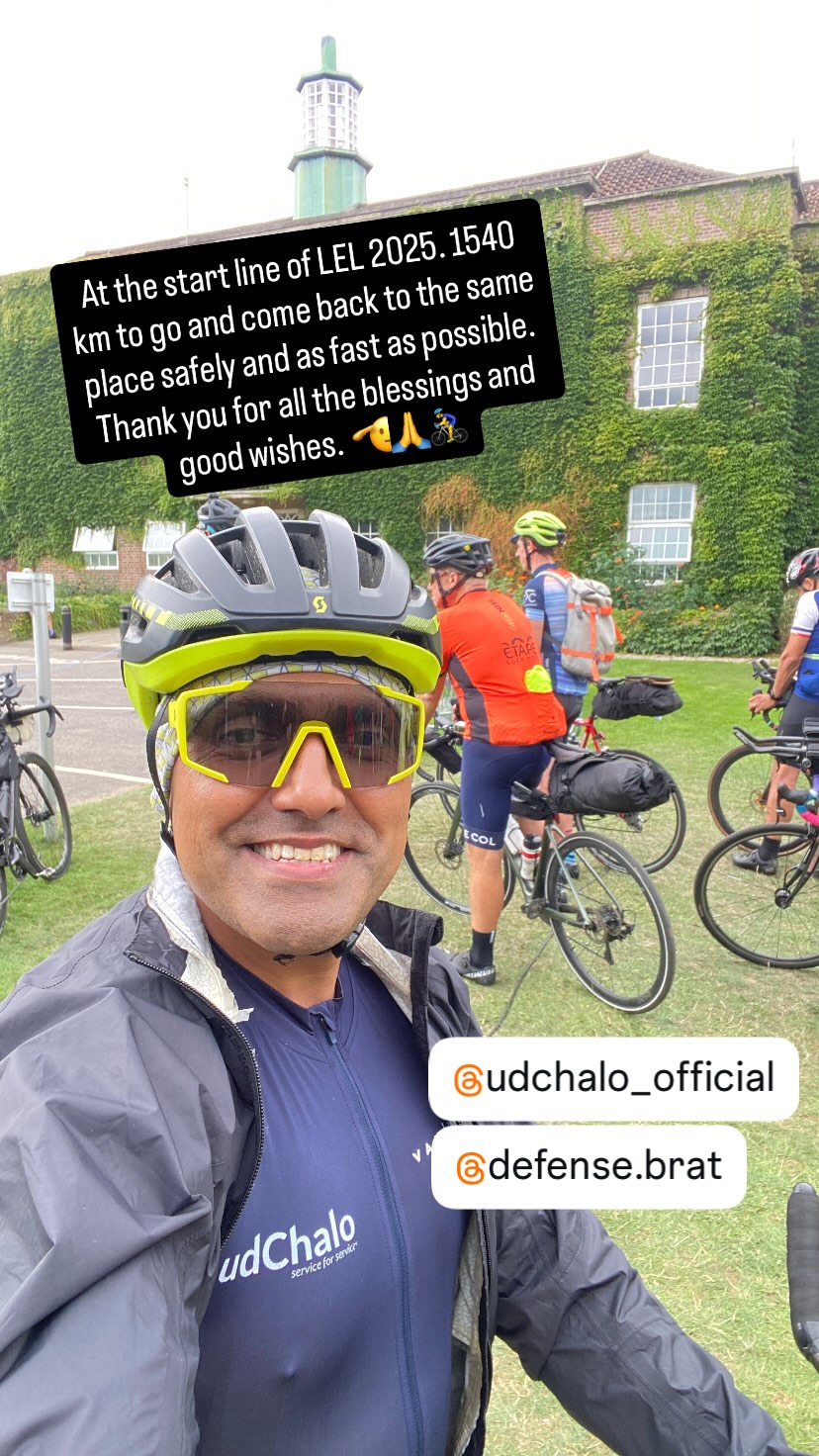
One of the world’s most legendary ultra-distance cycling events — 1,540 km self-supported across Britain and back — and then Storm Floris arrived with 100 mph gusts and wrote a different ending.
London–Edinburgh–London has been a bucket-list event for long-distance cyclists since its first edition in 1977. It runs every four years, attracts the best ultra-endurance riders from across the globe, and carries a level of history and prestige that few events anywhere in the world can match. For those who have done PBP — Paris–Brest–Paris — LEL is its British counterpart, and then some: tougher hills, more unpredictable weather, and a culture of quiet, gritty self-sufficiency that runs through every rider on the road.
Why LEL. Having completed RAAM and the vRAAM, set multiple world records on Indian roads, and tested the limits of self-supported racing through events like the Ultra Spice, LEL represented something different: a chance to race against the very best ultra-endurance cyclists in the world, in conditions that are nothing like the Indian subcontinent. The start at Writtle College, Essex, on 3 August 2025 was the culmination of months of training and planning. The Instagram caption at the start line said it simply: “1,540 km to go and come back to the same place safely and as fast as possible.”
The 2025 edition. This was the largest LEL in history — 2,100+ riders from 57 countries crossing the start line, riding a partially revised route with new control points including Northstowe (Cambridgeshire), Malton and Richmond (Yorkshire) and Brampton (Cumbria). The full route threads north through the rolling fens of Lincolnshire, over the moors of Yorkshire, through the Pennines and Cumbria and into the Scottish Borders, all the way to Edinburgh before turning south for the same distance home.
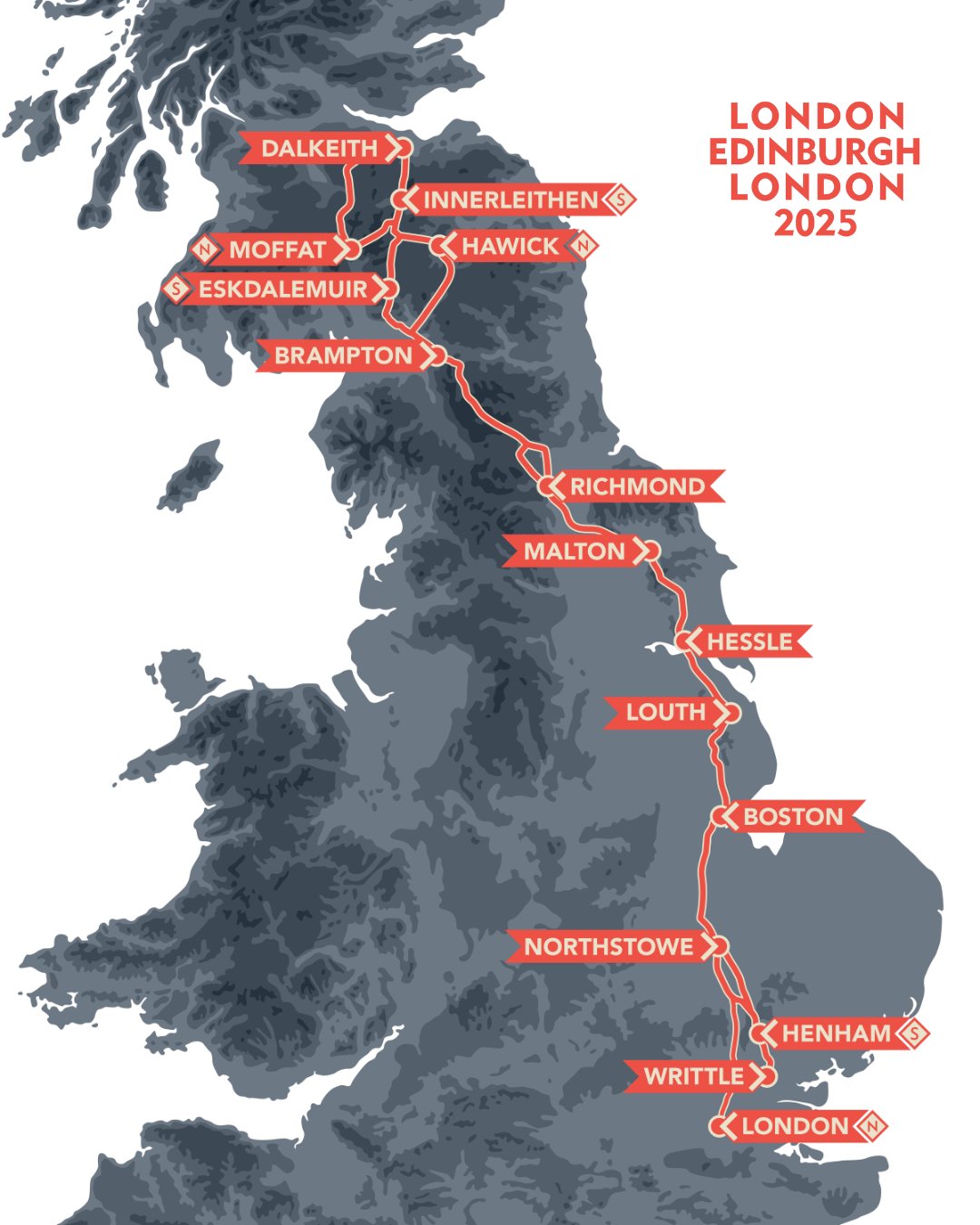
N = northbound only · S = southbound only · no mark = both directions
Day one on the road. The start at Writtle was charged with the particular energy that only a mass ultra-cycling event can produce — over two thousand riders, dozens of languages, every nationality of cycling jersey, all heading north. The early miles through Essex and Cambridgeshire are flat and fast; the field spreads out quickly as riders settle into their own pace. The key discipline in the opening hours is restraint: going too hard early is the classic LEL mistake, and with 1,500+ km still ahead, the ride demands patience that goes against every instinct.
“Blown right across the road multiple times.” One rider’s summary of the conditions on Yad Moss as Storm Floris made landfall over northern Britain with gusts exceeding 100 mph in parts of Scotland and sustained 60 mph winds across the exposed sections of the route.
On Day 2 of the event, Storm Floris stalled over northern Britain. The high moorland crossing of Yad Moss — one of the most exposed sections of the entire route, sitting on the Cumbria–County Durham border — became genuinely dangerous. Riders on the road reported being thrown from side to side, unable to hold a line, with conditions that made forward progress not just difficult but unsafe. Gusts in excess of 100 mph were recorded in parts of Scotland; the storm showed no sign of moving.
The organisers paused the event twice, holding all riders at their next control checkpoint for blocks of four hours each. When conditions did not improve, the decision was made: riders could not safely continue north. All participants were asked to turn south from wherever they had reached and make their way back to the start. Only one rider — New Zealander Ian McBride — had already reached Edinburgh before the suspension and thus completed the full 1,540 km route.
It was a situation unlike anything in LEL’s history: 2,100 riders, an event built over four years of planning and months of individual preparation, brought to a halt by one of the worst storms to hit Britain in years. And yet, in the way that defines ultra-endurance cycling culture, what followed was not deflation but something closer to solidarity. The volunteers — over 1,000 of them at control points across the country — were extraordinary. Riders turned south and rode on. The cycling world immediately began calling it the best “cancelled” Audax in history.
What endures. LEL 2025 will be remembered not for who finished first but for who showed up — and what they did when the plan was torn up. Two thousand riders from 57 countries, many of whom had been preparing for four years, turned their bikes south in a storm and rode home anyway. That spirit — the willingness to continue when the objective has changed, to find meaning in the riding itself rather than only in the outcome — is the same spirit that drives every ultra-endurance campaign. The next LEL runs in 2029.
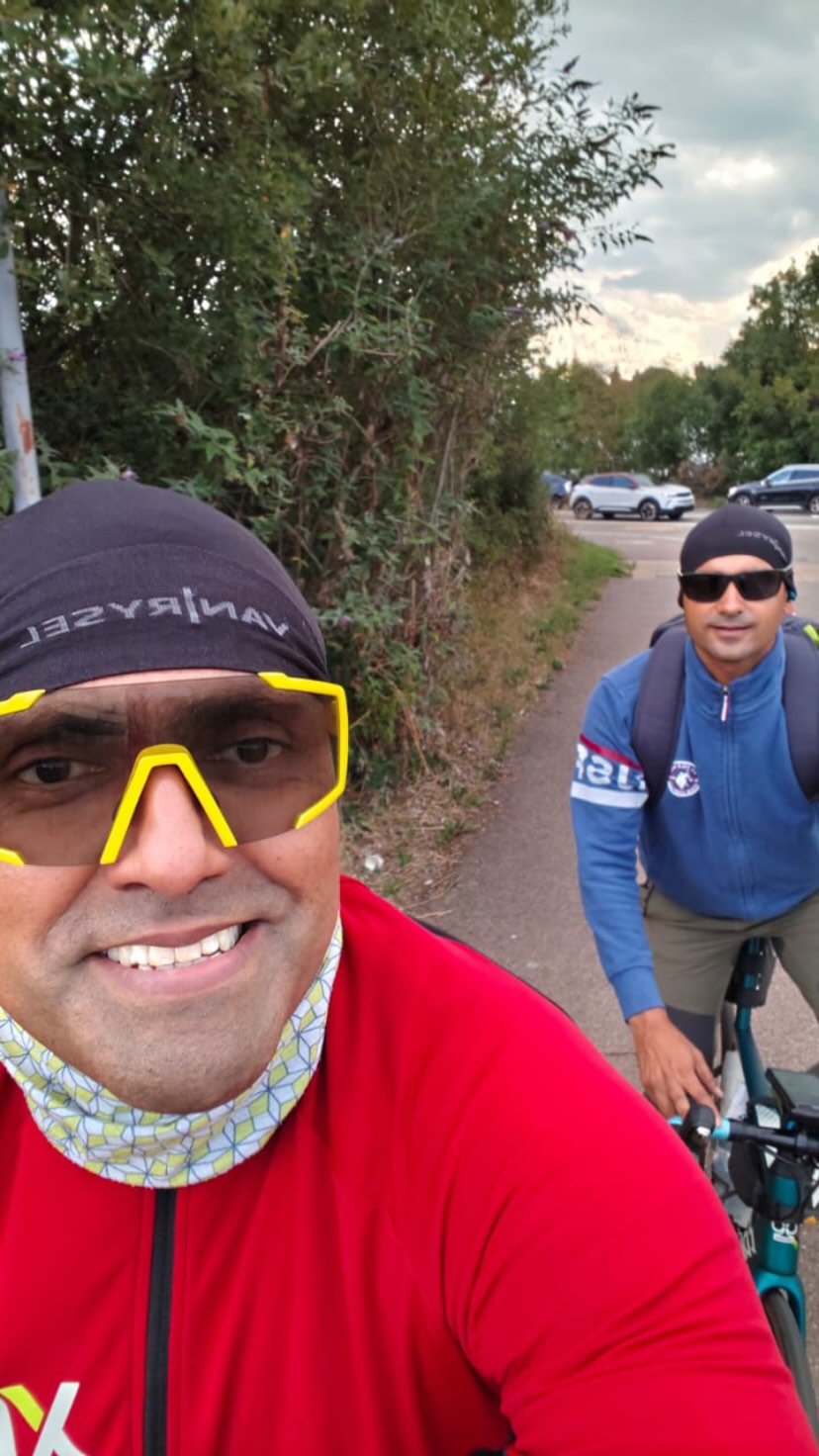
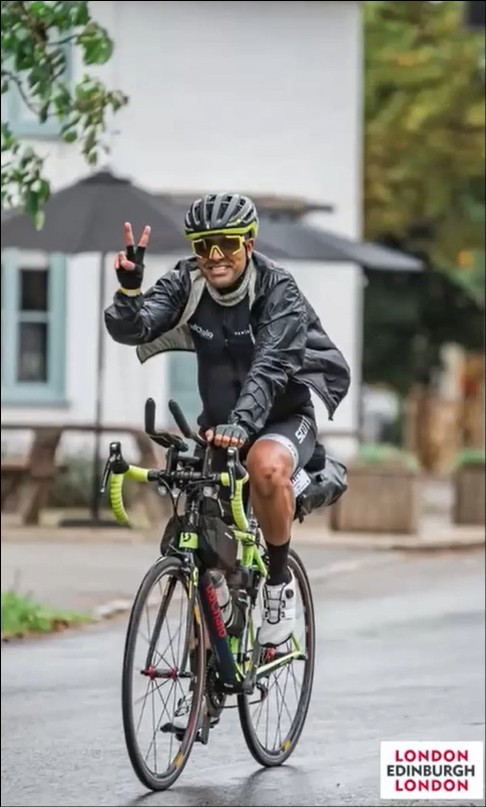
London–Edinburgh–London is a randonnée bicycle event of approximately 1,500 kilometres over an out-and-back course between London and Edinburgh — the two capital cities of Great Britain. It has run every four years since 1977 and is organised by Audax UK, the long-distance cycling association. The event is completely self-supported: no team cars, no support crew, no outside assistance beyond what is available at the official control checkpoints. Riders must carry everything they need and manage their own sleep, food and navigation within the time limit. The 2025 edition set a record as the largest-ever LEL, with 2,100+ riders from 57 countries at the start.
LEL sits alongside Paris–Brest–Paris (PBP) as one of the most prestigious long-distance audax events in the world. Completing LEL and PBP in the same four-year cycle is considered one of the great achievements in randonneuring. The route crosses some of Britain’s most challenging terrain — the exposed moorland of Yorkshire, the high passes of the Pennines and Cumbria, and the rolling hills of the Scottish Borders — making it a genuine test of fitness, navigation and mental resilience in all weathers.