

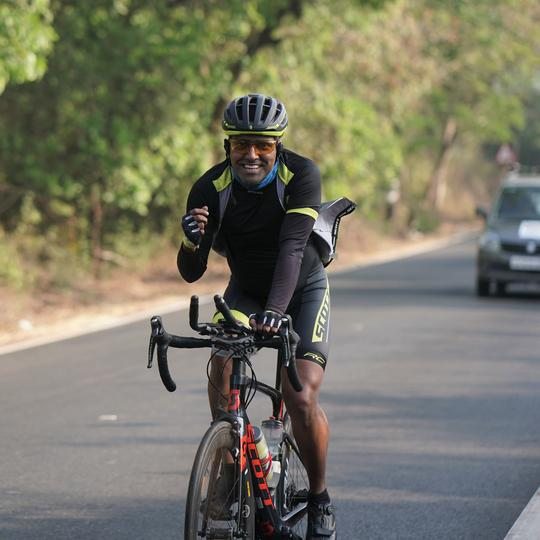
When I first heard the words “Super Randonneur,” I had no idea what they meant. A few months later, having ridden a 200, a 300, a 400 and a 600 in a single season, I held the title myself — and it changed the entire course of my life. If a late-starting recreational rider with no sporting background could do it, so can you. This is the guide I wish someone had handed me before my first brevet.
What a Super Randonneur Series Actually Is
A Super Randonneur (SR) series is the completion of four brevets — 200 km, 300 km, 400 km and 600 km — within a single randonneuring season. These are not races. They are self-supported long-distance rides against a clock, with time limits (roughly 13.5 hours for the 200, 20 for the 300, 27 for the 400 and 40 for the 600) and checkpoints called controls where you get your card stamped to prove you rode the route.
There are no team cars, no soigneurs, no one handing you bottles. You carry what you need, you solve your own problems, and you keep moving. That self-reliance is the whole point — and it is exactly what makes finishing your first SR series so satisfying.
Build the Base Before You Chase the Distance
The single biggest mistake I see is riders trying to jump straight to big distances. Endurance is built in layers, over months, not weeks. Long before you worry about 600 km, you need a deep aerobic base — the unglamorous, steady, conversational-pace riding that teaches your body to burn fat, hold a rhythm for hours, and recover between rides.
Consistency beats heroics. Four honest rides a week for three months will prepare you far better than one giant weekend ride followed by a week of nothing. Build your longest ride up gradually — a good rule is to extend it by no more than 10–15% at a time — so that by the time you line up for the 200, riding all day already feels normal.
Ride to the Clock, Not to the Group
Brevets are won and lost in the mathematics of time, not raw speed. What matters is your average moving speed including your stops. A rider who cruises at a modest pace but stops for only ten minutes at each control will comfortably beat a faster rider who loses an hour dawdling at every checkpoint.
Learn your numbers. Know what average you need to stay inside the time limit with a safe buffer, and practise riding at that effort. Start conservatively — the first-timer’s instinct to go out hard with a fast bunch is what ends most first 600s somewhere around the 400 km mark.
Eat and Drink Before You Need To
On a long brevet you are not riding a bike so much as managing a fuel tank. Eat and drink on a schedule, not on feeling — by the time you feel hungry or thirsty, you are already behind. Aim to take in carbohydrate every hour from the start (many riders target somewhere around 60 grams an hour), sip regularly, and replace salts on hot Indian days.
Practise your nutrition in training exactly as you will use it on the day. Your gut is trainable, and the brevet is not the place to discover that a particular gel or drink does not agree with you.
The 600 Is a Sleep Problem in Disguise
The first three brevets are largely fitness and pacing. The 600 adds a new variable: the night. Somewhere past the 400 km mark you will meet a version of tiredness you have not felt before, and how you handle it — a planned short sleep, a caffeine strategy, simply knowing it will pass — often matters more than your legs. Practise riding into the dark before the day itself. Confidence in the small hours is a trainable skill.
Comfort and Fit Beat Watts
Over 600 km, the limiting factor is rarely power — it is the three contact points: hands, feet and saddle. A proper bike fit is the best investment a new randonneur can make. Sort your saddle, your reach and your cleats. And the golden rule I repeat to everyone: never use anything new on brevet day. No new saddle, no new shorts, no new shoes, no new nutrition. Everything you rely on must be tested over long training rides first.
The Mistakes First-Timers Make
- Going out too hard in the opening hours and paying for it late.
- Spending far too long at controls — minutes there add up to hours.
- Under-eating and under-drinking early, then trying to claw it back.
- Never practising riding through the night before the 600.
- Turning up with new kit or an untested bike setup.
Where a Coach Fits In
You can absolutely build towards an SR series on your own — plenty do. But the difference a structured plan makes is that every week has a purpose, the four brevets are periodised so you arrive at each one fresh and progressing, and someone with experience is watching your data and adjusting before small problems become did-not-finishes. That is exactly what I do with the riders I coach: a plan built around your life and your goal, delivered on TrainingPeaks, with regular guidance from someone who has ridden a great deal further than 600 km.
Whether you chase your SR title solo or with help, the title is worth chasing. It taught me that the limits I assumed were fixed were mostly imaginary. Yours probably are too.